
Google raised the Pixel 10a price by $100 at once: why already released smartphones also started to get more expensive
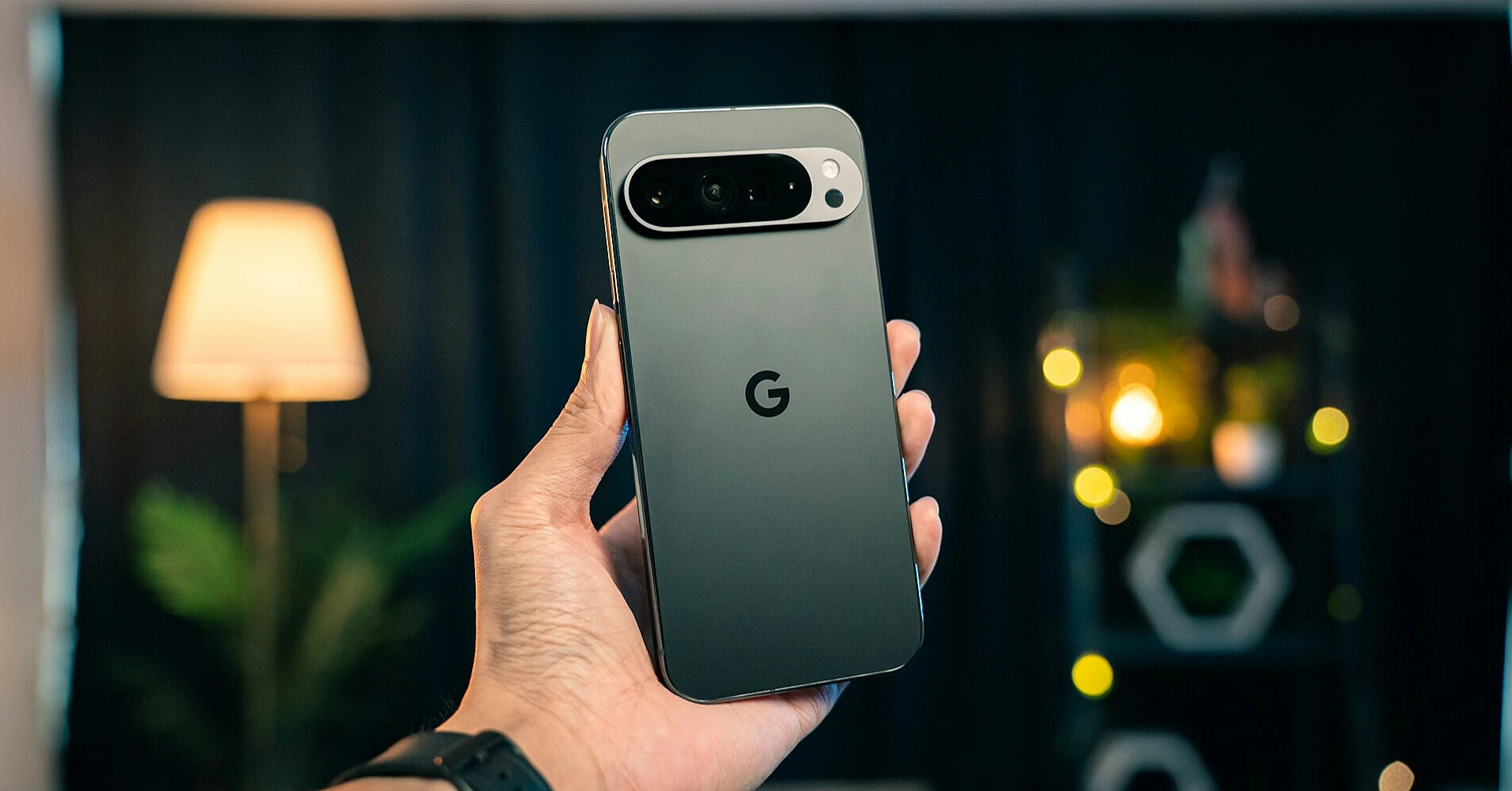
Google took an unusual step for the smartphone market: a few months after the release of the Pixel 10a, the company did not lower, but raised its official price in the US by $100 at once.
From October 2, the base version of Pixel 10a with 128 GB of storage costs $599 instead of $499 in the Google Store. The model with 256 GB is now offered for $699. New prices have already appeared not only at Google, but also at major American retailers Amazon and Best Buy.
Thus, the base Pixel 10a went up by about 20%, although the smartphone itself did not receive a new processor, camera, or other hardware improvements.
The reason is important far beyond one Google model. Electronics manufacturers are facing a sharp increase in memory costs, and industry analysts warn: not only new devices, but also smartphones that have already been on sale for several months may become more expensive.
Pixel 10a has been $499 since launch
Google introduced the Pixel 10a in February 2026, and sales began on March 5.
The company specifically positioned the model as a more affordable version of Pixel. In the US, the starting price was $499 — the same as previous Pixel 9a, Pixel 8a, and Pixel 7a.
The phone got a 6.3-inch screen, 8 GB of RAM, a 48 MP main camera, and the Tensor G4 processor. Google also promises seven years of software and security updates.
Seven months after the start of sales, the set of specifications remained the same, but the official price rose to $599.
For buyers, this is a particularly noticeable change: the model that originally competed in the sub-$500 smartphone category has now moved into the price range of about $600.
Google has not explained this particular increase yet
The company did not release a separate statement explaining the increase in the Pixel 10a price on October 2.
Therefore, it cannot be asserted that the reason for this particular decision was exclusively the cost of memory.
However, back in the summer, Google openly warned about the serious rise in RAM costs.
Shakil Barkat, vice president of Devices and Services, spoke of unprecedented memory price increases and noted that Google tried as long as possible to protect buyers of on-sale devices from component cost fluctuations.
At that time, the company also warned that changes in the supply chain could eventually affect Pixel models that are already on the market.
The Pixel 10a price increase became just such a case.
Memory became one of the most expensive smartphone components
The problem is not only about Google.
According to Counterpoint Research, in the second quarter of 2026, smartphone memory prices rose by more than 80% compared to the previous quarter.
As a result, dynamic random-access memory (DRAM) in some modern smartphones has already surpassed the processor and become the most expensive individual component of the device.
The price growth is especially painful for budget models, where manufacturers initially operate with smaller margins.
According to Counterpoint's calculations, the component cost of comparable budget smartphones in the second quarter could be about 70% higher than a year earlier, and memory accounted for most of the increase.
Separate estimates by TrendForce show an even steeper jump. Contract prices for some types of mobile LPDDR memory grew by about 70–80% in just one quarter in the second quarter.
Why memory prices are surging
One of the main reasons is not in smartphones, but in data centers for artificial intelligence.
Memory manufacturers find it more profitable to allocate production capacity to more expensive server components and memory for AI systems.
As a result, the production of mobile DRAM and NAND flash memory competes for capacity with the rapidly growing server market.
TrendForce notes that demand from AI infrastructure continues to limit the supply of memory for consumer electronics.
And the pressure has not yet disappeared. For the fourth quarter of 2026, analysts forecast a further increase in contract prices: standard DRAM may rise by another 10–15% for the quarter, NAND Flash — by 15–20%.
For smartphones, the situation is complicated by the fact that cheap component inventories purchased by companies earlier are gradually running out.
Why a phone already on the shelf might get more expensive
Usually electronics behaves in the opposite way: after the release of a new smartphone, its price gradually decreases.
But the cost of a device is not fixed forever on the day of its presentation.
The manufacturer continues to purchase components for new batches. If a memory contract was concluded at one price, and a few months later it has to be renewed at a significantly higher price, the production cost of the next batch of the same phone increases.
While the growth is moderate, the company can reduce its own margin and keep the retail price unchanged.
But if components rise in price by tens of percent, the ability to absorb additional costs shrinks.
That is why an unusual scenario has appeared on the market: a smartphone may cost more half a year after release, although technically it has not improved at all.
Google is not the only one raising prices
The rise in memory costs is already reflected in the pricing policies of other manufacturers.
Google increased the starting prices of the new Pixel 11 series compared to the previous generation. In the US, the Pixel 11 launched at $899 and up, the Pixel 11 Pro from $1099, and the Pixel 11 Pro XL from $1299.
Samsung also raised prices on a number of Galaxy smartphones in the US, linking cost pressure in part to the rise in RAM prices.
TrendForce reported as early as early 2026 that some Chinese manufacturers took an especially unusual step — they began retroactively raising retail prices of already released models.
Now a similar practice has appeared at Google.
What this means for buyers
An increase in the official price does not mean that the Pixel 10a will always be sold exactly for $599.
Amazon, Best Buy, carriers, and Google itself can run promotions and temporarily lower the device's price. There are traditionally many discounts before major sales events.
But a change in the recommended price matters: it is usually the basis for calculating future discounts and positioning of the model relative to competitors.
The Pixel 10a situation also illustrates a broader risk for the electronics market.
If memory stays expensive, manufacturers may use several methods simultaneously to compensate for rising costs: raising prices, reducing memory in base versions, offering discounts less often, or making older models cheaper more slowly.
For budget and mid-range smartphones, the problem is especially sensitive, because an extra $50–100 can push a device into a completely different price category.
The Pixel 10a became a clear example of the new market situation: waiting a few months after a smartphone release no longer guarantees a lower price. If memory costs continue to rise, already released electronics in individual cases may, on the contrary, become more expensive.
Based on materials from: Google, 9to5Google, Counterpoint Research, TrendForce.
